
Thoughts After Hosting the Builders & Backers Table dinner in Zurich
AI Is Rewriting the Rules of Growth, Capital, and Competition

By Rafael Karamanian
Founder and Managing Partner at Lendity
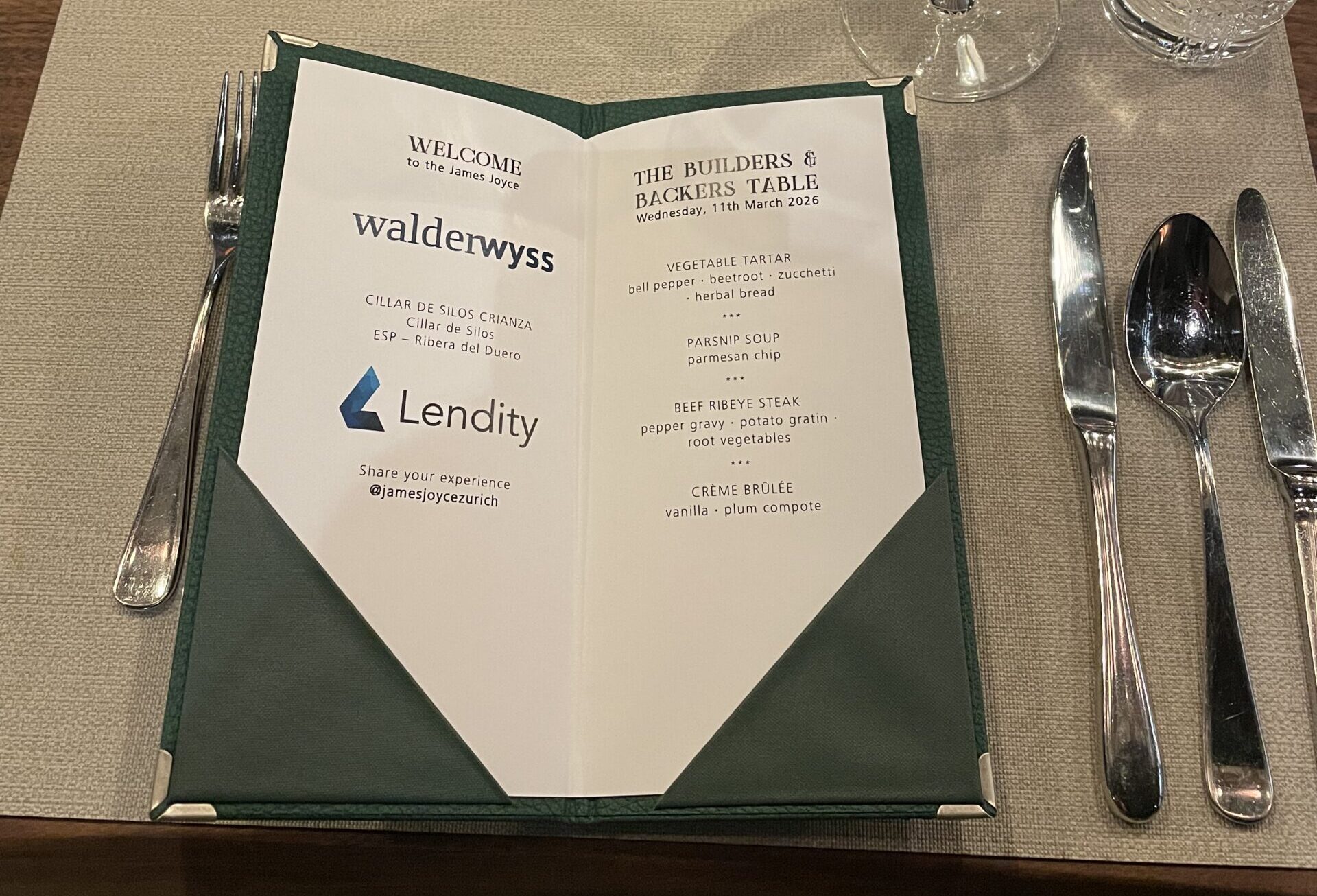
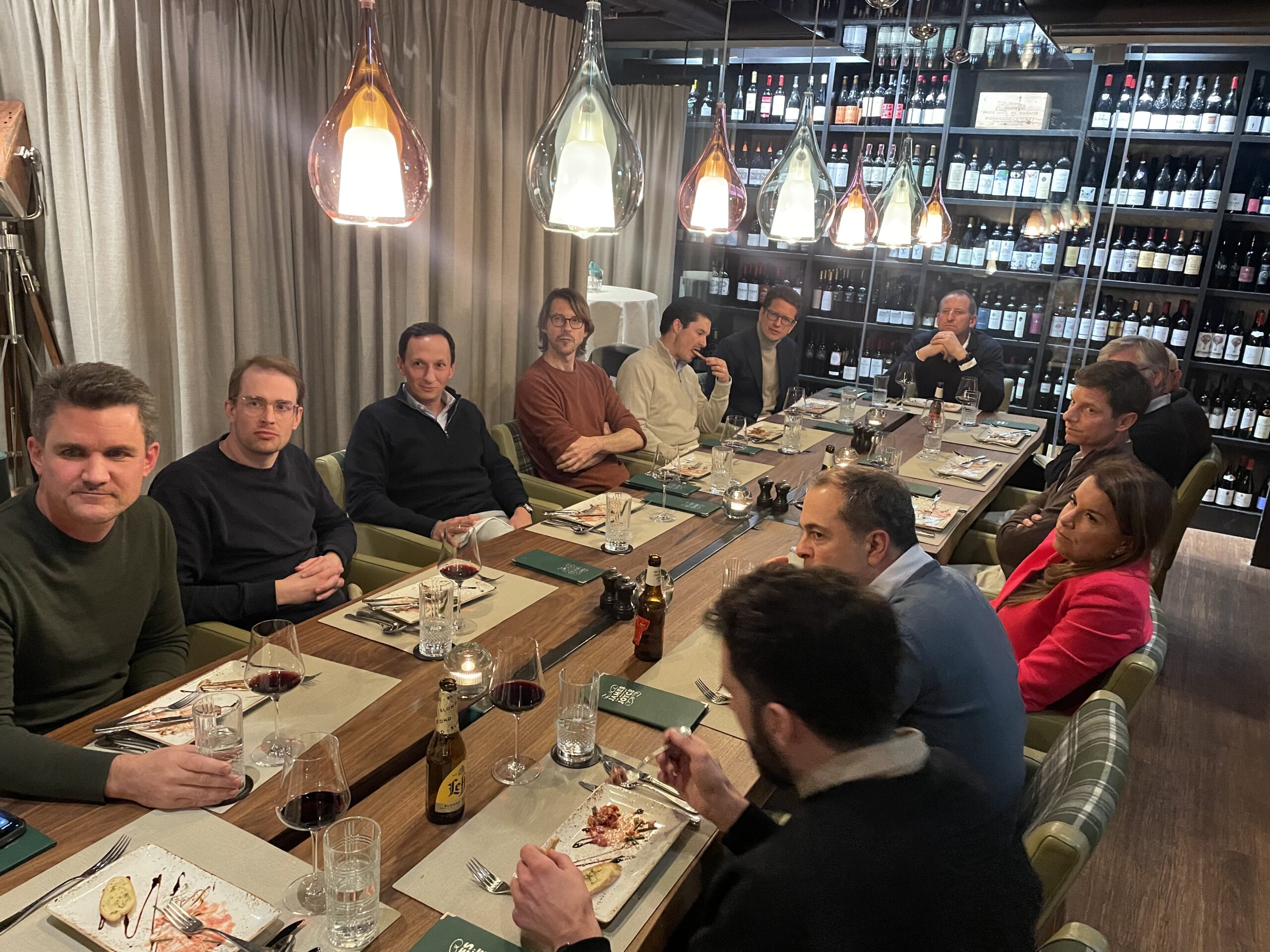
Last night we hosted Builders & Backers Table dinner in Zurich. Hubertus from WalderWyss and I brought together 14 founders, investors, and operators for a private dinner under Chatham House Rule. The idea was simple: pick two themes that matter right now, sit down, and have the kind of conversation that never happens at conferences.
The two themes were AI offense versus defense, and what should change in how companies finance growth if AI is rewriting cost structures and competitive dynamics. I expected a good discussion. What I got was an evening I genuinely did not want to end.
I’m condensing what we discussed and my thoughts. The conversation that came out of that room is too good to keep to ourselves, so here is my attempt to capture it for those who were not at the table.
Everyone is playing defense. That is no longer a strategy.
Every founder at the table is already using AI to optimize operations. Smaller teams, faster workflows, lower costs. Some have cut headcount by half while keeping revenues flat (actually, more should do it). That is a real transformation of the P&L, and it has immediate consequences for how these companies look to investors and lenders.
But here is what became clear as we talked: in a year or two, everyone will have done this. When every competitor has also automated their support, trimmed their ops team, and sped up their development cycle, the advantage evaporates. Defensive AI is becoming table stakes. It is necessary for survival, but it is not a growth strategy and it certainly is not a moat.
The paradox that kept coming up is that boards and investors tend to push for defensive AI first because the ROI is immediate and easy to measure. Reducing headcount by 30% shows up on a spreadsheet within a quarter. But the room was in agreement that the real value creation sits on the offensive side, where it is much harder to justify in a board presentation because the payoff is less predictable and the timeline is uncertain.
And there is a downstream consequence nobody is talking about enough. If companies across the economy are running leaner, that means fewer jobs, less income tax, smaller payroll contributions. The fiscal gap this creates is going to hit governments hard. Fiscally disciplined countries will work on it proactively, but the ones already running chronic deficits will struggle. More debt only works if GDP grows with it. Otherwise, the math and the solution starts looking inflationary. This is not just a startup question. It is a macro question that should be on every policy agenda. Maybe it is, but I’m not aware about it.
Offense is where the real game begins.
The distinction that sharpened over the course of the evening is simple but powerful. If AI only hits your cost line, it is defense. If it changes your revenues, your retention, your distribution, your speed to market, your bargaining power with customers, that is offense. Offensive AI creates something that could not have existed before: entirely new products, new ways to reach customers, new competitive positions that compound over time.
Defensive advantages last maybe 12 months before competitors catch up with the same tools. Offensive advantages, done right, can compound for years because they create new customer relationships, new workflows, new dependencies that are hard to replicate even when the underlying technology becomes widely available.
But playing offense is harder than it sounds, especially in Europe. A founder shared something I found genuinely surprising. When they show enterprise clients what their AI-powered solutions can do, the reaction is often a mix of admiration and fear. People are impressed with the capabilities, then immediately worried about the consequences. There is a version of the old "nobody gets fired for buying IBM" dynamic playing out. Decision makers default to the safe, established choice rather than adopting the tool that could transform their business but also carries uncertainty.
And in countries with rigid labor law, the friction is even more structural. If you sell an enterprise a product that could reduce their workforce by 20%, but their legal framework makes that restructuring slow, expensive, or politically toxic, then the purchase decision looks very different from what it would in other countries. Unions and some governments are actively adding speed bumps. These are temporary frictions that will ease over time, but right now they are real and founders building for European enterprises need to plan around them.
Foundation models are geopolitical. Switzerland should play a different game.
In February 2026, OpenAI raised USD 110 billion in a private round. I want to write that out so it lands properly: USD 110,000,000,000. One round. One company. With a post-money valuation landing around USD 840 billion.
Europe cannot compete in foundational model development. This is not a question of ambition or talent. It is a strategic geopolitical decision that can only be made by the country with the world's reserve currency, running at extraordinary deficit and debt levels, with a capital market infrastructure built to absorb that kind of risk. Foundational AI is being funded at the scale of national defense budgets. That has nothing to do with normal venture financing.
But the conversation at our table made me more optimistic, not less, about the European opportunity. The offensive play for Swiss and European companies is not building the next GPT. It is applying AI in regulated, trust-heavy verticals where credibility, data sovereignty, and deep domain expertise create defensible positions that Silicon Valley cannot simply replicate by throwing money at the problem.
Switzerland has genuinely solid infrastructure to run AI solutions without data ever leaving the country. You may not get the absolute latest frontier model, and it will cost more, but you get sovereignty. For industries like defense, healthcare, government, and financial services, that is not a nice-to-have. It is non-negotiable.
There was also a strong point raised about talent. If before you needed 10 engineers to build a product, now maybe you need 3. But they need to be exceptional. There is no room for mediocrity anymore when a small team with the right tools can outperform a larger one. This is actually where Switzerland can shine. We have always been able to attract and retain world-class talent. In a world where team size shrinks but quality requirements go up, that becomes an even bigger advantage.
When technology commoditizes, trust and distribution become the moat.
One of the most interesting threads of the evening was about what actually constitutes a defensible position in a world where AI capabilities are being commoditized this fast.
The consensus was clear: technology alone will not be enough. Things move so fast in AI that any purely technical advantage gets caught up with quickly. What endures is distribution, trust, and network. If you have been serving your clients for years and they are still with you, that relationship is your biggest asset. Protect it like gold.
We are leapfrogging many steps right now. The next winning solution will not be a nicer interface or a more polished dashboard. The way we solve customer pain going forward will look fundamentally different from anything we have been building. The companies that understand this and move first, getting deeply embedded in client workflows before competitors do, will be the ones that are still standing when the dust settles.
There is a related concern that came up about new entrants. The real risk for established SaaS companies is not that their enterprise clients will build AI tools themselves. That is unlikely for complex vertical software. The risk is a new competitor offering an equivalent product at a fraction of the cost, built from day one with AI, running a team of 5 instead of 50, with a healthier cap table that gives them the flexibility to undercut on price and still be profitable. That is the structural threat, and it is very real.
The capital question nobody has a good answer to yet.
This was the part of the evening where the energy really picked up, because it touches everyone at the table in a different way.
The old playbook for financing growth is breaking down. AI-native startups are reaching meaningful revenue with a fraction of the team and capital that was required even three years ago. Some are following the Supernova path, raising enormous rounds and growing at rates the industry has never seen. Others are what Bessemer recently called Shooting Stars: companies growing at 4x year-over-year with solid margins and real retention, replacing the old SaaS growth benchmark of triple-triple-double-double-double with something closer to quadruple-quadruple-triple-triple-triple.
But for most founders, the question is more practical. What kind of capital actually fits a world where products get built faster, competition arrives faster, and go-to-market may get more expensive rather than less? Does AI compress the need for early capital because building is cheaper, or does it increase the need for growth capital because distribution becomes the bottleneck? These are questions we debated without reaching clean answers.
The VC model is under real pressure. In a world where AI makes teams leaner and paths to profitability shorter, giving away 20 to 30% of the company in a dilutive round may not be the right trade. The job of venture investors has become genuinely more difficult because the traditional dynamics that justified large ownership stakes are shifting.
At the same time, debt requires founders to be honest about their defensibility. We underwrite on durability: systems of record, proprietary data, long client histories, network effects, switching costs, regulated industry positions. Not every AI startup has those characteristics, and founders should audit their own defensibility clearly before choosing their capital strategy.
The point that stayed with me is that capital efficiency is becoming a moat in itself. Companies that grow profitably while competitors burn through cash have a structural advantage that compounds over time. The founders who think about capital structure as a strategic weapon, choosing the right instrument for the right purpose at the right stage, will outperform the ones who just default to raising the next equity round because that is what everyone else does. And the worst? These investors are unlikely to reach their return target, creating further problem for the founders (read zombies).
What about the world beyond this table?
The conversation took a philosophical turn toward the end of the evening, which I think says something about the people in the room.
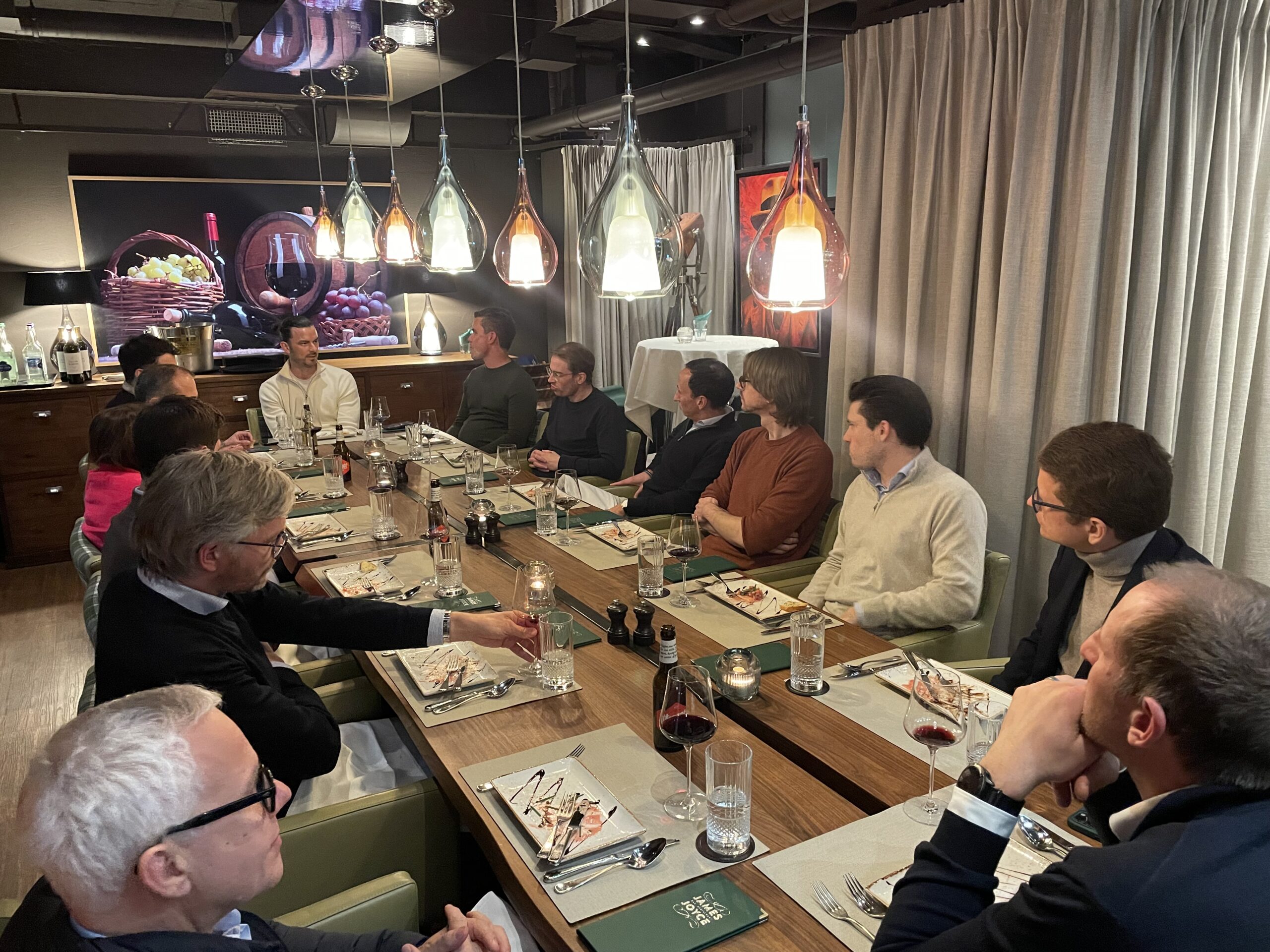
We are a micro-bubble. Founders and investors in Zurich, drinking wine in a cellar, debating the future of technology and capital. AI is likely to accelerate wealth concentration significantly. What happens to the rest of the world? How do we build something better? We did not solve this question, and I do not think anyone expected to. But I was glad it was raised, because it is too easy to get lost in the excitement of building and forget that the consequences extend far beyond our ecosystem.
We also got into a genuinely interesting debate about the next generation. What should our kids study? What should they prepare for? There was no consensus, but the closest thing to agreement was this: let them go deep into whatever genuinely excites them (many went for ski, of course). Passion and depth in a specific domain will matter more than following a prescribed path. The traditional route of university plus master to become solid in one vertical field had many skeptics at the table. The world is changing too fast for a rigid plan.
And then there was the most human moment of the evening. Someone said, with complete honesty: "I could go enjoy the mountains with Rafa, drink wine, spend two or three weeks doing nothing. But at week four, I want to be back doing things." That resonated with everyone. Purpose is what drives us. Even if singularity becomes real for some of us, even if the economics of work change completely, the need to create and build and contribute is deeply human. I do not think that goes away.
The real shift is just beginning.
AI is already changing how companies are built, how teams operate, and how value gets created. But if there is one thing I took away from this evening, it is that efficiency alone will not be enough.
The companies that matter in the next cycle will not just use AI to do the same things cheaper. They will use it to become strategically stronger. Harder to replace. Closer to the customer. Faster where it matters. More trusted where it counts.
That is the real shift. And I suspect we are only at the beginning of it. Super exciting times!
The Builders & Backers Table is a private dinner series hosted by Lendity, bringing together founders, investors, and operators for honest conversations about what is actually happening in tech and finance. If you would like to be considered for a future edition, get in touch.
Build smarter. Scale faster. Give up less.
Join 400+ founders getting our monthly insights on capital and growth.
Learn more about Funding Strategies

The Headcount Control Tower: How to Scale Efficiently by Tying Hiring to Revenue
Tag: Funding Strategies

The Capital Stack: A Guide Not to Accidentally Selling Your Entire Company
Tag: Funding Strategies

SeedStrapping: Why Your Next Round Might Be Your Worst Decision
Tag: Funding Strategies